B2B trade shows for distributors: Moving from ‘brand awareness’ to ROI
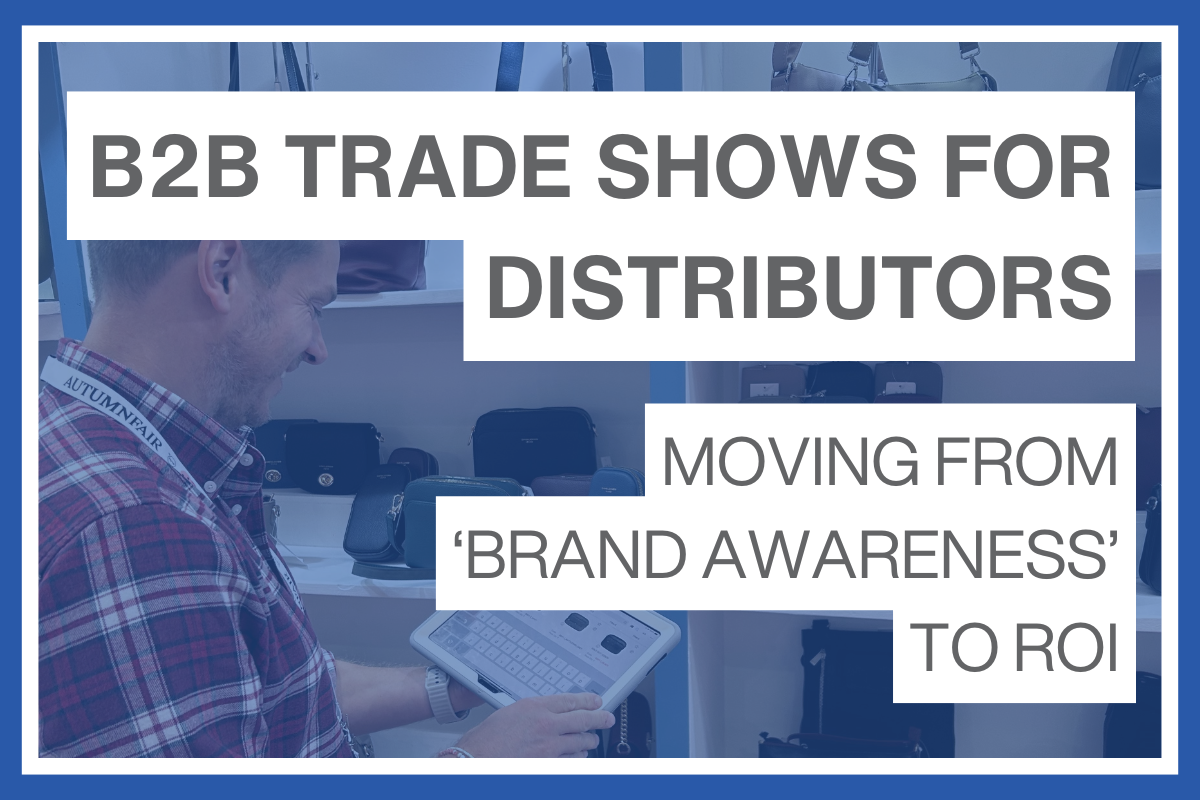
B2B trade shows for distributors are expensive, exhausting and still one of the most misunderstood parts of the sales mix. They can drive serious revenue or quietly drain budgets while teams convince themselves it was about brand awareness.
This guide explains how distributors should approach trade shows today. Not as a marketing exercise, but as a structured sales channel with clear outcomes, measurable performance and follow up that actually happens.
If you exhibit at trade shows, this page is your reset.
Why B2B trade shows still matter for distributors
B2B trade shows still work because they compress months of sales activity into a few days.
Buyers turn up ready to review ranges, compare suppliers and make decisions. Your reps are face-to-face with existing accounts and new prospects without the friction of booking meetings.
That hasn’t changed.
What has changed is buyer expectation.
Buyers expect:
-
Clear ranges, not bloated catalogues
-
Confident answers, not “I’ll check and get back to you”
-
A buying experience that feels efficient
Trade shows reward distributors who are organised. They punish those who rely on memory, paper order pads and post show admin.
The real problem with most distributor trade shows
Most distributors don’t fail at trade shows because of poor footfall or bad stand design. They fail because they treat the event as isolated from the rest of their sales operation.
Common problems include:
-
Orders written on paper and rekeyed weeks later
-
Leads captured with no clear ownership
-
No visibility of which accounts attended
-
No way to link conversations to follow up activity
-
No data to prove what the event actually delivered
By the time the team is back in the office, momentum is gone.
That’s not a trade show problem. It’s a systems problem.

What success looks like at a distributor trade show
A successful trade show has three clear characteristics.
First, reps know exactly who they are targeting before the doors open.
Second, conversations turn into orders or structured next steps while the retailer is still engaged.
Third, management can see what happened without chasing spreadsheets and opinions.
In practice, that means:
-
Account plans prepared in advance
-
Ranges and pricing ready on day one
-
Orders captured digitally, not written down
-
Follow ups logged automatically
-
Post show reporting based on facts
When trade shows are treated like a sales channel, performance improves quickly.
How distributors should prepare for trade shows
Preparation is where most ROI is won or lost.
The strongest distributors start weeks before the event. Not with stand graphics, but with data.
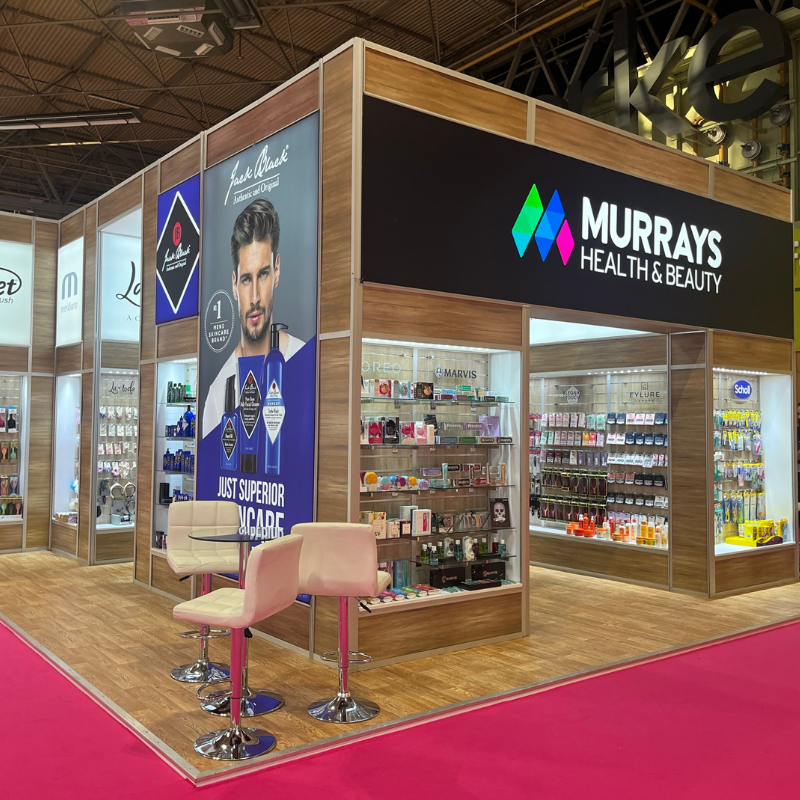
Key preparation steps include:
-
Identifying attending customers and prospects
-
Flagging priority accounts for each rep
-
Pre loading product ranges and promotions
-
Aligning pricing rules with ERP data
-
Setting clear goals per rep, per day
This turns the event from a passive showcase into an active selling window.
Preparation also reduces stress. Reps walk onto the stand knowing who they need to speak to and what success looks like.
How reps should sell at trade shows
Trade show selling should be simpler than field selling. You have attention, urgency and context.
Yet many reps overcomplicate it.
The best trade show conversations follow a clear flow:
-
Confirm retailer priorities
-
Focus on relevant ranges only
-
Show products visually
-
Capture the order or next action immediately
Digital catalogues make this easier. Reps can browse ranges together with the retailer, check live pricing and availability, and place orders without leaving the stand.
That speed matters. Retailers see dozens of suppliers. The easier you are to buy from, the more likely you’ll win the order.
Taking orders at trade shows without slowing down
Paper order pads feel quick in the moment. They are slow everywhere else.
They introduce errors, delays and friction exactly when retailers are most motivated.
Digital order capture changes the dynamic completely.
When reps can:
-
Place orders live
-
Apply customer specific pricing
-
Validate minimums and rules
-
Sync orders directly to ERP
Orders move faster and confidence increases on both sides.
Buyers leave knowing the order is in. Reps leave knowing the job is done.

Managing leads and follow ups properly
Not every conversation will end with an order. That’s fine.
What matters is that every meaningful conversation is logged, owned and followed up.
Strong distributors:
-
Capture prospect details digitally
-
Tag conversations by interest or category
-
Assign follow ups before the show ends
-
Trigger tasks automatically
This avoids the common post show scramble where no one remembers who spoke to whom.
Follow up becomes a process, not a hope.
Measuring trade show ROI without guesswork
Trade show ROI is often reduced to opinions. “It felt busy”, “we had good conversations”, “there was strong interest”.

None of that helps with budgeting decisions.
Distributors need to measure:
-
Orders placed during the event
-
Orders placed after the event
-
New accounts opened
-
Pipeline value created
-
Rep activity and conversion
When tradeshow activity is connected to CRM and order data, this reporting becomes straightforward.
You can finally answer whether the event was worth repeating.
How Aspin supports distributor trade shows
Aspin helps distributors turn trade shows into structured, measurable sales activity.
PixSell sales app supports reps on the stand with:
-
Digital catalogues available offline
-
Live order taking with ERP integration
-
Customer specific pricing and rules
-
CRM visibility before, during and after the event
InterSell supports buyers who want to reorder after the show without waiting for a rep visit.
SkooCloud ensures product data, images and assets are consistent across stands, reps and follow up activity.
Together, they remove friction from the entire trade show lifecycle.

Practical next steps for distributors
If trade shows matter to your business, start here:
-
Review how orders are currently captured
-
Audit what data you can actually report on
-
Identify where momentum is lost after the event
-
Align sales, marketing and operations before the next show
Small changes before your next exhibition can dramatically improve results.
Related Articles