From card pockets to mobile apps: Aspin’s long history with the greeting card sector

Greeting card merchandising software has changed enormously over the last 30 years. Publishers have expanded their ranges, retail displays have become more sophisticated, and field sales teams have moved from paper based replenishment processes to connected mobile sales technology.
Despite all that change, one thing has stayed remarkably consistent: greeting card retail still revolves around the display.
What sits at eye level matters, and what gets moved lower down matters just as much. Empty pockets lose sales, while poor merchandising gets noticed immediately by both retailers and publishers.
That’s one of the reasons the greeting card sector adopted specialist merchandising software and sales technology earlier than many other wholesale sectors.
As Aspin prepares to exhibit at PG Live 2026 at the Business Design Centre in London, we’ve been reflecting on our long history working alongside greeting card publishers and distributors, and how the operational pressures behind greeting card retail have evolved over the years.
Why greeting card merchandising has always been different

Greeting card merchandising has never really worked like other wholesale sectors.
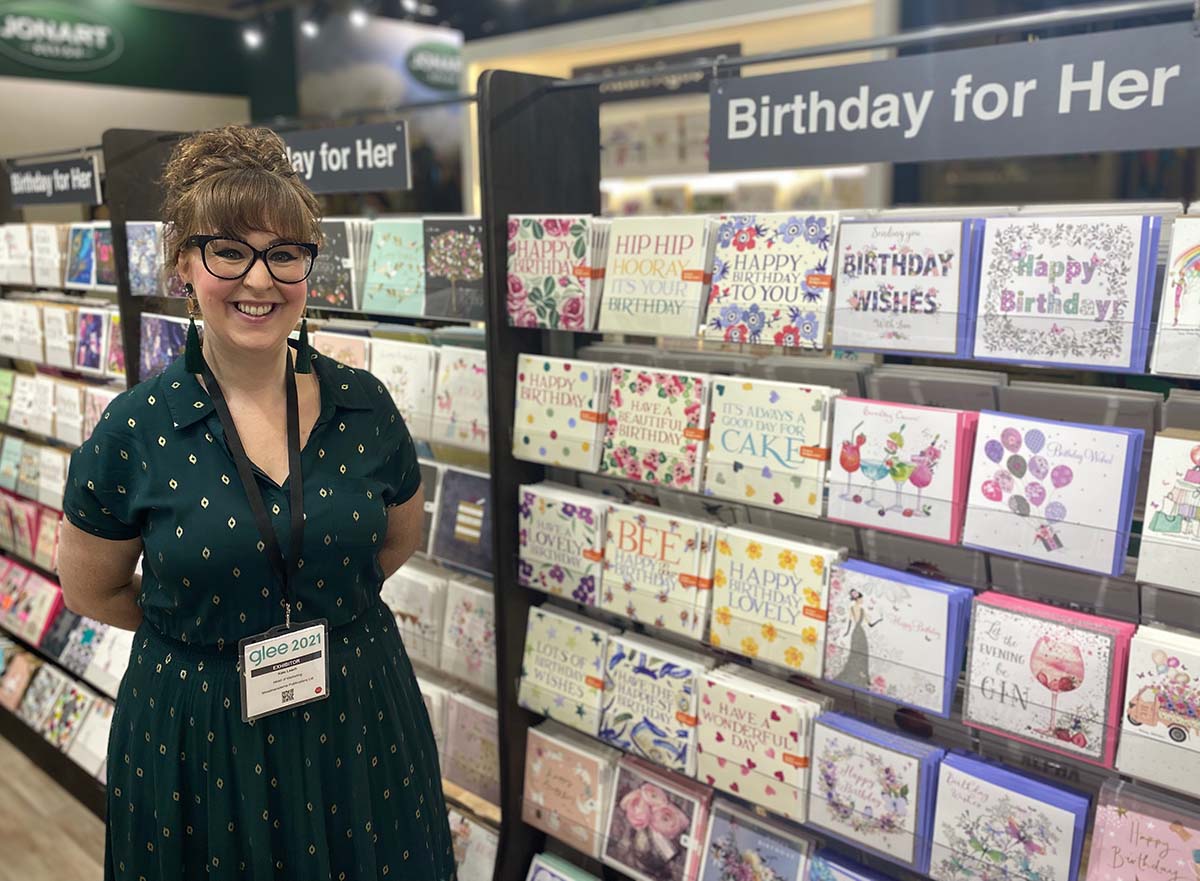
Publishers are not simply managing SKUs, they are managing displays, display positions and the commercial performance of individual pockets across thousands of retail locations.
A best selling card placed at eye level might perform brilliantly, while moving that same design lower down can completely change its sales performance. Sometimes weaker designs are moved into stronger positions to test whether the issue is the product itself or simply where it sits within the display.
The display itself becomes part of the sales strategy.
Back in the early 1990s, replenishment was still heavily manual, with reps visiting stores, checking displays pocket by pocket and collecting reorder tickets from behind the display stands. Those tickets were then posted or faxed back to publishers for warehouse processing.
As publishers expanded their ranges and retail networks, the whole process became increasingly difficult to manage consistently at scale.
t to manage consistently at scale.
How CDMS changed greeting card replenishment
Working alongside Carte Blanche, Aspin developed CDMS as part of the Amsolve ERP platform.
The real shift was not simply about speeding up replenishment, but systemising the merchandising logic behind it.
Rather than relying on replenishment being managed product by product, CDMS allowed publishers to manage stock around display pockets and centrally controlled merchandising structures.
That mattered because greeting card retail is driven by merchandising discipline as much as the products themselves.
When warehouse teams processed replenishment tickets through CDMS, the system connected pocket information back into the merchandising logic held inside Amsolve, which allowed publishers to manage display consistency, replenishment structures and product placement far more systematically across large retail estates.
At the time, the system could process around 300 tickets per minute, which represented a major operational improvement for growing publishers managing increasingly complex displays.
The operational thinking behind that workflow still feels surprisingly familiar today.
From paper tickets to mobile sales apps
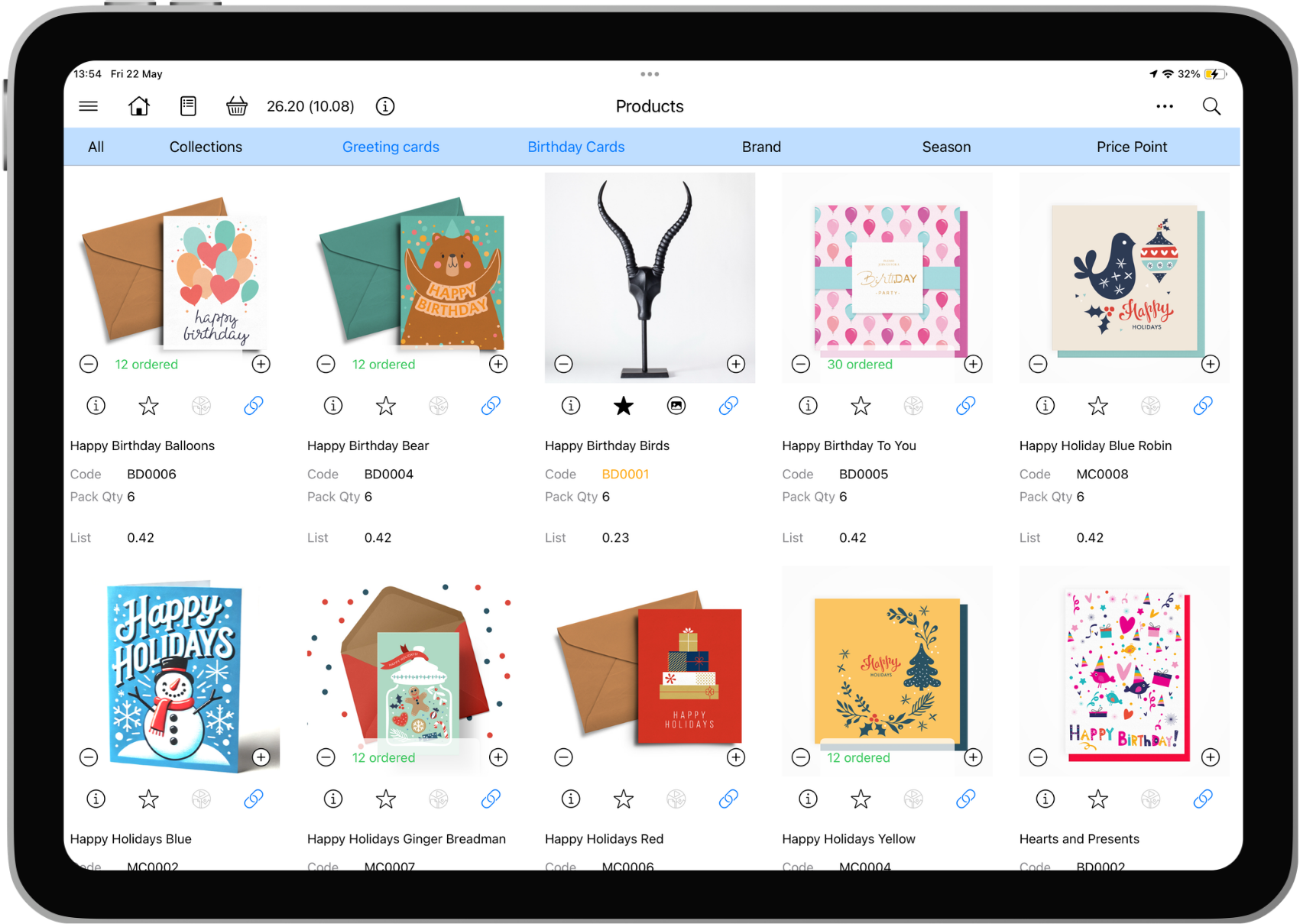
Over the years, greeting card sales technology evolved from paper based replenishment processes into mobile ordering systems, digital catalogues and connected sales apps.
The arrival of the iPad in 2010 became a major turning point for field sales teams across wholesale and distribution because, for the first time, reps had a device that properly supported ordering, customer management and product presentation together in one place.
Today, platforms like PixSell help publishers and distributors manage ordering, merchandising and customer relationships from a single mobile sales environment.
Some of the original operational principles behind CDMS still exist inside the PixSell Plan module today, where merchandising logic is still built around managing display pockets and replenishment structures consistently across retail displays rather than simply reordering individual SKUs.
The technology has changed enormously, but the operational pressures behind greeting card retail really haven’t.
We’re looking forward to catching up with publishers, distributors and retailers at PG Live next week, so if you’re attending the show, come and say hello to the Aspin team.
Related Articles